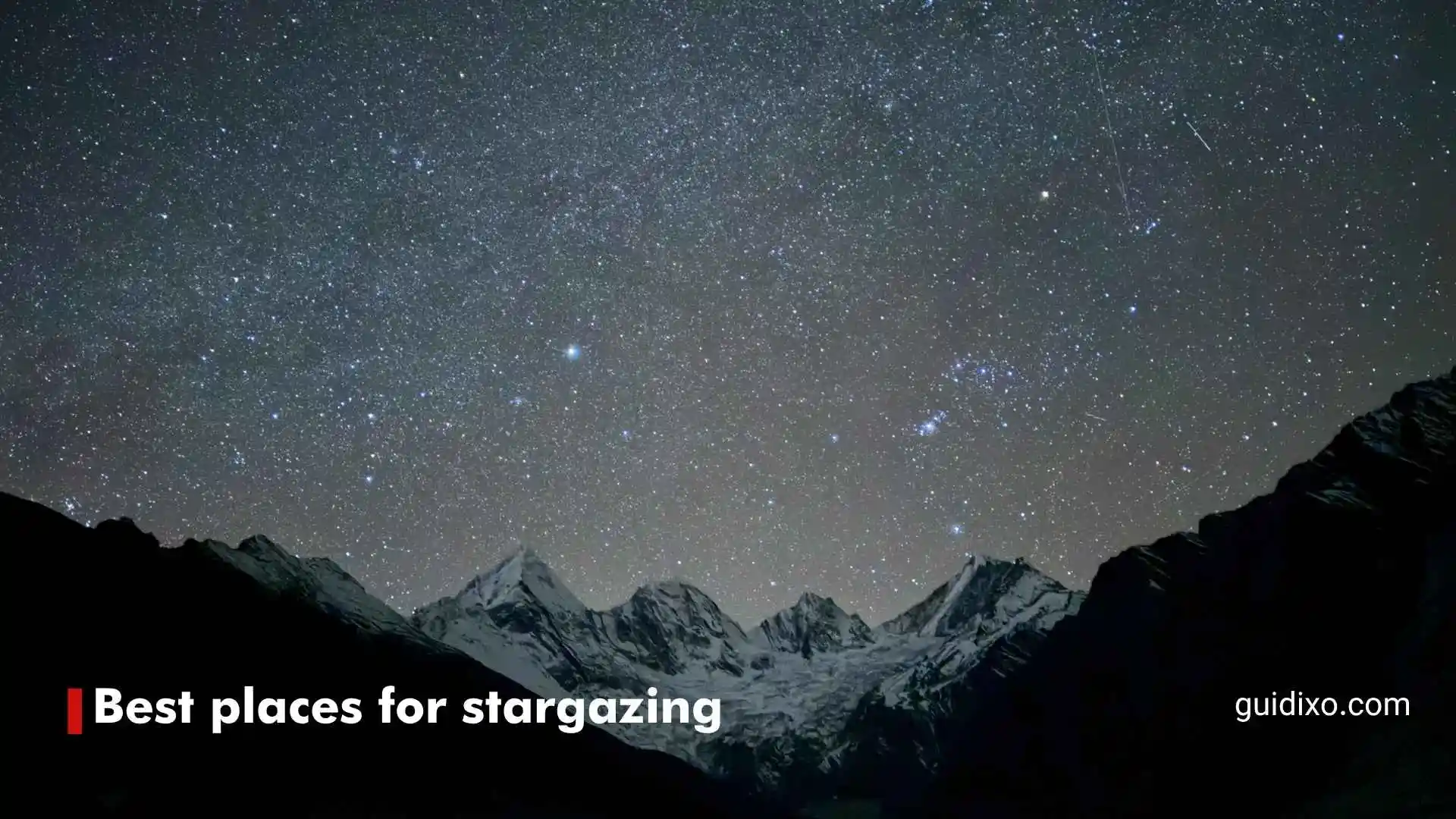
The best places for stargazing offer more than just a view of the night sky. They provide a chance to escape city lights, experience untouched landscapes, and witness stars, planets, galaxies, and meteor showers with remarkable clarity. From remote deserts and mountain valleys to dark-sky islands and national parks, these destinations create unforgettable astronomy experiences.
This guide is designed for travelers, photographers, couples, families, adventure seekers, and anyone who wants to discover the most breathtaking places to observe the universe. Whether you want to see the Milky Way stretching across the sky, photograph star trails, join an astronomy tour, or simply enjoy a peaceful night outdoors, these destinations offer some of the world’s most rewarding stargazing opportunities.
Quick Answer: What Are the Best Places for Stargazing?
The best places for stargazing include Aoraki Mackenzie International Dark Sky Reserve, Mauna Kea, Atacama Desert, Jasper National Park, and NamibRand Nature Reserve. These destinations are famous for minimal light pollution, clear skies, unique landscapes, and exceptional views of stars, planets, and deep-space objects.
Quick Comparison Table: Best Stargazing Destinations
| Place | Location | Best For | Top Attraction | Best Time to Visit | Average Budget | Family Friendly | Couple Friendly | Adventure Level | Recommended Stay |
| Atacama Desert | Chile | Deep-sky viewing | Milky Way and observatories | April–September | Medium | Yes | Excellent | Medium | 3–5 days |
| Mauna Kea | Hawaii, USA | Astronomy enthusiasts | High-altitude stargazing | Year-round | High | Yes | Excellent | Medium | 2–3 days |
| Jasper National Park | Canada | Families and nature lovers | Dark Sky Festival | September–October | Medium | Excellent | Excellent | Low–Medium | 3–5 days |
| Aoraki Mackenzie Reserve | New Zealand | Photographers | Southern Hemisphere stars | March–October | Medium | Yes | Excellent | Medium | 2–4 days |
| NamibRand Reserve | Namibia | Luxury stargazing | Desert night skies | May–October | High | Limited | Excellent | Medium | 2–4 days |
| Death Valley National Park | USA | Desert landscapes | Milky Way views | Winter–spring | Low–Medium | Yes | Good | Medium | 2–3 days |
| La Palma | Spain | Dark-sky tourism | Volcano landscapes | Year-round | Medium | Yes | Excellent | Medium | 4–7 days |
| Uluru | Australia | Cultural astronomy | Desert night skies | May–September | Medium–High | Yes | Excellent | Low | 2–3 days |
20 Best Places for Stargazing Around the World
1. Atacama Desert, Chile
Why It Made the List
The Atacama Desert is one of the world’s most famous destinations for stargazing because it combines extremely dry air, high altitude, and some of the darkest skies on Earth. The desert’s remote location in northern Chile creates ideal conditions for observing distant galaxies, nebulae, and planets.
What Makes It Special
The Atacama’s skies are so clear that many professional astronomical observatories operate here, including the Paranal Observatory and the ALMA Observatory.
Visitors can experience the universe from landscapes filled with salt flats, volcanoes, and red desert valleys.
Top Attractions
- Valle de la Luna (Moon Valley)
- El Tatio Geysers
- Salar de Atacama salt flats
- Astronomy tours near San Pedro de Atacama
Best Things to Do
- Join guided telescope tours
- Photograph the Milky Way
- Visit observatories
- Watch sunset over desert landscapes
Best Time to Visit
April through September offers some of the clearest nights, especially during the dry season.
Estimated Budget
- Budget travelers: $50–100 per day
- Comfortable travel: $120–250 per day
- Luxury experiences: $300+ per day
Ideal Travelers
Families: Great for educational astronomy experiences.
Couples: Perfect for romantic desert evenings.
Solo Travelers: Excellent destination for adventure and photography.
Luxury Travelers: High-end desert lodges offer premium experiences.
Budget Travelers: Affordable tours are available from San Pedro de Atacama.
Travel Tips
Avoid visiting during a bright full moon if your goal is seeing faint stars. Book astronomy tours in advance during peak seasons.
Nearby Attractions
- Andes Mountains
- Licancabur Volcano
- Rainbow Valley
Fun Fact
The Atacama Desert is one of the closest environments on Earth to Mars because of its extreme dryness and terrain.
Local Food to Try
- Chilean empanadas
- Pastel de choclo
- Cazuela stew
Suggested Visit Duration
3–5 days.
2. Mauna Kea, Hawaii, United States
Why It Made the List
Mauna Kea is among the most famous astronomical locations in the world. Its summit rises nearly 14,000 feet above sea level, placing observers above much of Earth’s atmosphere.
What Makes It Special
The mountain hosts some of the world’s most advanced telescopes, including the W. M. Keck Observatory.
The combination of altitude, dry air, and limited light pollution creates exceptional viewing conditions.
Top Attractions
- Mauna Kea Visitor Information Station
- Summit sunset views
- Telescope facilities
- Hawaiian cultural sites
Best Things to Do
- Attend stargazing programs
- Watch sunset from high elevation
- Learn about Hawaiian astronomy traditions
Best Time to Visit
April through October usually provides excellent weather conditions.
Estimated Budget
- Budget: $100–150 per day
- Mid-range: $200–350 per day
- Luxury: $400+ per day
Ideal Travelers
Best for couples, photographers, astronomy fans, and educational family trips.
Travel Tips
Altitude sickness is possible. Spend time adjusting before traveling to the summit.
Nearby Attractions
- Hawai‘i Volcanoes National Park
- Kona beaches
- Akaka Falls
Fun Fact
Ancient Polynesian navigators used the stars for ocean exploration long before modern astronomy.
Suggested Visit Duration
2–3 days.
3. Aoraki Mackenzie International Dark Sky Reserve, New Zealand
Why It Made the List
Located on New Zealand’s South Island, this dark sky reserve offers some of the best southern hemisphere stargazing.
What Makes It Special
Visitors can see celestial features that are difficult or impossible to observe from northern locations, including the Southern Cross and Magellanic Clouds.
Top Attractions
- Lake Tekapo
- Mount John Observatory
- Aoraki/Mount Cook National Park
Best Things to Do
- Stargazing tours
- Night photography
- Scenic hiking
- Hot spring astronomy experiences
Best Time to Visit
March through October provides excellent visibility.
Estimated Budget
- Budget: $80–150 per day
- Mid-range: $150–300 per day
Ideal Travelers
Excellent for families, photographers, couples, and nature lovers.
Travel Tips
Renting a car is recommended because many viewing areas are remote.
Nearby Attractions
- Lake Pukaki
- Tasman Glacier
- Southern Alps
Fun Fact
The reserve covers thousands of square kilometers protected from excessive artificial lighting.
Local Food to Try
- New Zealand lamb
- Salmon dishes
- Pavlova dessert
Suggested Visit Duration
2–4 days.
4. Jasper National Park, Canada
Why It Made the List
Jasper National Park is one of the largest accessible dark sky preserves in the world. Its combination of mountains, lakes, and wilderness makes it a favorite for families and photographers.
What Makes It Special
The park hosts astronomy events where visitors can learn about planets, constellations, and space science.
Top Attractions
- Pyramid Lake
- Maligne Lake
- Athabasca Falls
Best Things to Do
- Attend the Jasper Dark Sky Festival
- Photograph stars over mountains
- Explore nighttime wildlife experiences
Best Time to Visit
September and October are especially popular because of astronomy events.
Estimated Budget
- Budget: $100–180 per day
- Mid-range: $200–350 per day
Ideal Travelers
Families, couples, photographers, and outdoor enthusiasts.
Travel Tips
Bring warm clothing because mountain temperatures drop quickly after sunset.
Nearby Attractions
- Banff National Park
- Icefields Parkway
- Columbia Icefield
Fun Fact
Jasper’s mountain landscapes create dramatic foregrounds for astrophotography.
Suggested Visit Duration
3–5 days.
5. NamibRand Nature Reserve, Namibia
Why It Made the List
NamibRand offers one of Africa’s most spectacular combinations of wilderness and dark skies.
What Makes It Special
The reserve’s remote desert environment provides almost no artificial light, creating incredible views of stars above ancient dunes.
Top Attractions
- Namib Desert dunes
- Desert wildlife
- Luxury astronomy camps
Best Things to Do
- Sleep under the stars
- Take guided astronomy walks
- Photograph desert landscapes at night
Best Time to Visit
May through October.
Estimated Budget
- Budget: Limited options
- Mid-range: $200–400 per day
- Luxury: $500+ per day
Ideal Travelers
Best for couples, photographers, and luxury adventure travelers.
Travel Tips
Prepare for remote conditions and long drives between destinations.
Nearby Attractions
- Sossusvlei dunes
- Sesriem Canyon
Fun Fact
Namibia’s desert skies reveal thousands of stars visible without a telescope.
Suggested Visit Duration
2–4 days.
6. Death Valley National Park, United States
Death Valley is one of the best stargazing places in the United States because of its remote desert location and protected dark skies.
Highlights
- Mesquite Flat Sand Dunes
- Badwater Basin
- Dante’s View
Best Time to Visit
Winter and early spring are ideal because summer temperatures can become dangerously high.
Best For
- Road trips
- Families
- Beginner astrophotographers
- Budget travelers
Travel Tip
Carry extra water, fuel, and emergency supplies because services are limited.
7. La Palma, Canary Islands, Spain
La Palma is known as the “Beautiful Island” and is a leading European destination for astronomy tourism.
Highlights
- Roque de los Muchachos Observatory
- Volcanic landscapes
- Atlantic Ocean views
Best For
- Couples
- Photographers
- European travelers
Best Time
Year-round, especially summer and autumn.
8. Uluru, Australia
Uluru offers a unique combination of astronomy, Aboriginal culture, and desert scenery.
Highlights
- Field of Light installation
- Desert astronomy tours
- Cultural storytelling
Best Time
May through September.
Best For
Families, couples, and cultural travelers.
9. Canary Islands, Spain
The Canary Islands provide excellent stargazing because of their ocean isolation and protected skies.
Highlights
- Tenerife volcano landscapes
- Teide National Park
- Observatory visits
Best For
European travelers seeking accessible dark skies.
10. Kerry International Dark Sky Reserve, Ireland
Ireland’s Kerry region combines coastal scenery with some of Europe’s darkest skies.
Highlights
- Atlantic coastline
- Mountain landscapes
- Rural villages
Best For
Travelers who want stargazing combined with culture and history.
Hidden Gems for Stargazing
1. Great Basin National Park, Nevada, USA
This lesser-known park offers exceptional dark skies, ancient bristlecone pine forests, and mountain landscapes.
2. Kielder Forest, England
Kielder is one of Europe’s largest protected dark sky areas and is ideal for travelers visiting the United Kingdom.
3. Rann of Kutch, India
The white salt desert creates a stunning setting for nighttime photography.
4. Hortobágy National Park, Hungary
A peaceful European destination with wide open landscapes and excellent visibility.
How to Choose the Right Stargazing Destination
Budget
Choose nearby national parks or rural areas if you want affordable stargazing. International destinations often require higher transportation costs.
Weather
Clear skies matter more than location alone. Dry climates and areas with fewer clouds usually provide better visibility.
Activities
Choose destinations based on interests:
- Photography: Atacama, Mauna Kea, Aoraki
- Family learning: Jasper, Death Valley
- Luxury experiences: Namibia
- Cultural experiences: Uluru
Travel Style
Adventure travelers may prefer remote deserts, while families may prefer accessible parks.
Accessibility
Consider:
- Driving distance
- Road conditions
- Accommodation availability
- Local tours
Travel Costs for Stargazing Trips
| Expense | Budget Range | Mid-Range Range | Luxury Range |
| Accommodation | $40–100/night | $120–250/night | $300+/night |
| Food | $20–40/day | $50–100/day | $150+/day |
| Transportation | $20–60/day | $70–150/day | $200+/day |
| Stargazing Tours | $20–80 | $100–200 | $300+ |
| Daily Budget | $80–150 | $200–400 | $500+ |
Best Time to Visit for Stargazing
Spring
Spring offers comfortable temperatures in many desert destinations.
Summer
Summer provides long evenings and popular astronomy events but may bring crowds.
Autumn
Autumn often provides clearer skies and fewer visitors.
Winter
Winter skies can be extremely clear, but cold temperatures require proper clothing.
Peak Season
Popular dark sky destinations are busiest during summer and major astronomy festivals.
Off-Season
Traveling during shoulder seasons often provides lower prices and quieter experiences.
Safety Tips for Stargazing Trips
- Check weather forecasts before traveling.
- Avoid hiking unfamiliar areas after dark.
- Bring a flashlight with a red-light mode.
- Carry water in desert locations.
- Dress in layers for temperature changes.
- Respect protected natural areas.
- Avoid driving while distracted by the night sky.
- Follow local wildlife safety guidelines.
Stargazing Packing Checklist
Essential Items
- Warm jacket
- Comfortable shoes
- Headlamp or flashlight
- Water bottle
- Camera and tripod
- Binoculars
- Telescope (optional)
- Star map app
- Portable charger
- Snacks
Photography Gear
- Wide-angle lens
- Extra batteries
- Memory cards
- Tripod
Frequently Asked Questions
What is the best place in the world for stargazing?
The best place depends on your goals, but destinations like the Atacama Desert, Mauna Kea, Aoraki Mackenzie Reserve, and NamibRand are among the most impressive because of their dark skies and unique landscapes.
What makes a place good for stargazing?
Great stargazing locations usually have low light pollution, clear weather, high elevation, dry air, and limited cloud cover.
Can beginners enjoy professional stargazing locations?
Yes. Many famous destinations offer guided tours with telescopes and astronomy experts, making them suitable for beginners.
What month is best for seeing the Milky Way?
In many locations, April through September provides excellent Milky Way visibility, although the best month depends on your hemisphere and destination.
Are national parks good places for stargazing?
Yes. Many national parks protect dark skies and provide wide-open landscapes away from city lights.
Do I need a telescope for stargazing?
No. Many stars, planets, and constellations can be seen with the naked eye. Binoculars can improve the experience.
Is stargazing better during a full moon?
Usually not. A bright moon can reduce visibility of faint stars and galaxies. Dark moon phases are often better.
What is the best stargazing destination for families?
Jasper National Park, Death Valley, and many accessible dark sky reserves are excellent choices for families because they combine education with outdoor activities.
Key Takeaways
- The best places for stargazing combine dark skies, clear weather, and unique landscapes.
- The Atacama Desert is ideal for deep-space viewing.
- Mauna Kea offers world-class astronomy experiences.
- Jasper National Park is excellent for families.
- Aoraki Mackenzie Reserve provides incredible southern hemisphere views.
- Desert destinations often provide some of the clearest skies.
- The best trip depends on budget, weather, accessibility, and travel style.
- Proper planning improves safety and the overall stargazing experience.
Conclusion
The best places for stargazing allow travelers to experience the universe in a way that city environments rarely provide. Whether you choose a Chilean desert, a Hawaiian mountain summit, a Canadian wilderness park, or a remote African reserve, each destination offers a unique connection with the night sky.
The ideal stargazing trip is not only about seeing more stars. It is about exploring remarkable landscapes, learning about astronomy, enjoying peaceful moments outdoors, and creating memories under some of Earth’s darkest skies. With the right destination, timing, and preparation, anyone can experience the wonder of the cosmos.

I am Sienna Marlowe, a passionate travel writer fascinated by beautiful places, local culture, and unforgettable experiences. I enjoy researching destinations that offer something special, whether famous or hidden. Through my writing, I help readers discover the best places to visit and find inspiration for their next adventure.
Books:
- Beautiful Places: A Guide for Curious Travellers
- Hidden Corners and Unforgettable Journeys